The recent Tshwane Human Settlements Symposium, which was held at the Centurion Hotel under the theme “Forging Partnerships for Sustainable Human Settlements Development”, brought together key stakeholders to engage on one of the country’s most pressing priorities — the delivery of sustainable human settlements.
The symposium provided an important platform to reflect on the challenges facing the sector, while also highlighting practical solutions centred on partnership, investment, and coordinated delivery.
Human Settlements Minister, Thembi Simelane, while delivering the keynote address set the tone for the conversation, saying the 2026/27 budget had been slashed by almost R7 billion, which posed constraints on government’s ability to deliver on its mandate.
“The future of human settlements delivery depends on our ability to align planning, infrastructure, financing, regulation, and implementation behind a common vision,” Minister Simelane said.
She emphasised the need for “coordinated action”.
The Gauteng Partnership Fund (GPF), an agency of the Gauteng Department of Human Settlements, positioned itself as a critical enabler in the housing and development value chain.
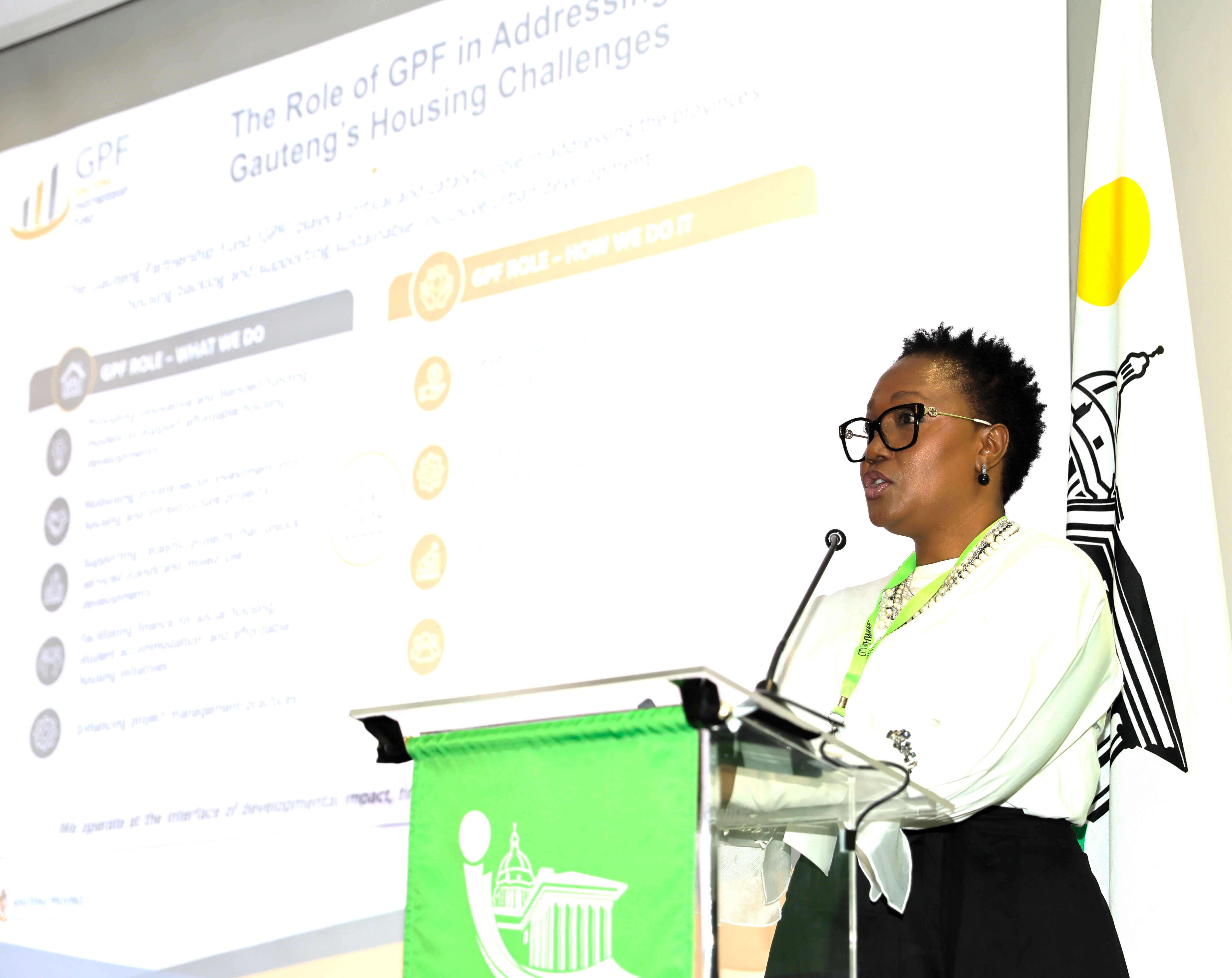
The Chief Executive Officer, Lindiwe Kwele, as part of her presentation, said that the GPF’s role extends beyond traditional financing. As outlined in the presentation, the organisation acts as a strategic partner that supports the structuring, funding and implementation of development projects, helping to convert development concepts into bankable and executable opportunities.
Through its programmes, the GPF plays a catalytic role in:
- advancing spatial transformation,
- supporting affordable rental and social housing,
- enabling informal settlement upgrading, and
- unlocking well-located land for development.
This is critical when housing demand nationally, but particularly in Gauteng, continues to outpace supply, and where funding alone is insufficient to drive delivery.
A key theme from Kwele’s presentation was the recognition that structural constraints continue to limit housing delivery and project viability.
These include:
- delays in planning and approvals,
- inadequate infrastructure investment,
- land readiness challenges,
- weak project preparation, and
- fragmented coordination across stakeholders.
Such constraints not only delay project implementation but also reduce investor confidence and weaken bankability.
There was a recurring message that aligned efforts across municipalities, developers, financial institutions and government institutions was necessary to address the challenges.
The symposium also featured contributions from the Gauteng MEC for Human Settlements, Tasneem Motara; Executive Mayor of Tshwane, Cllr Nasiphi Moyo, alongside a range of stakeholders, reinforcing the importance of multisector collaboration in addressing housing challenges.
In this context, the GPF remains well-positioned as a credible and capable partner, leveraging its experience, funding instruments, and implementation support to help unlock projects and drive measurable impact.
For more information on GPF funding programmes or applications, please visit: https://gpf.org.za or call 011 685 6600.